Chippewa River Comprehensive Watershed Management Plan Public Hearing Notice
PUBLIC HEARING NOTICE
NOTICE is hereby given that the Chippewa River Watershed Association Joint Powers Board is holding a Public Hearing at 9:15 a.m. on Friday, April 19, 2024, at the Pope County Courthouse Community Room, 130 E. Minnesota Avenue, Glenwood, MN regarding the Chippewa River Comprehensive Watershed Management Plan adoption.
Information will be presented and discussed regarding the draft comprehensive watershed management plan for the Chippewa River Watershed, which covers portions of Otter Tail, Grant, Douglas, Stevens, Pope, Stearns, Swift, Kandiyohi, and Chippewa Counties. This Plan was previously out for 60-day review from December 18th – February 27th, 2024. This Plan was developed cooperatively by the County Boards and SWCD Boards in Otter Tail, Grant, Douglas, Stevens, Pope, Stearns, Swift, Kandiyohi, and Chippewa Counties.
Any interested person(s) may appear at the above time and place and are invited to attend the hearing and submit comments, written or verbal, that will become part of the official public hearing record.
Please submit written comments by 9:15 a.m. on Friday, April 19th, 2024 using the contact information below. Comments will be considered when making final revisions to the plan.
By Mail: Pope Soil and Water Conservation District
Attn: Holly Kovarik, District Manager
1680 Franklin Street North
Glenwood, MN 56334
By E-Mail: holly.kovarik@mn.nacdnet.net
Subject: “Chippewa River Watershed Plan Public Comments”
Copies of the current draft Plan, maps of the planning area, a summary of the response to comments, and related documents are available on the Chippewa River Watershed website: https://chippewariverwatershed.org/plans/comprehensive-watershed-management-plan/
A hard copy of the draft plan is available upon request at the following locations during regular business hours of 8 a.m. to 4:30 p.m., Monday through Friday. Please call ahead to make an appointment to view the hard copies at the following location: Pope Soil and Water Conservation District 1680 Franklin Street North, Glenwood, MN 56334.
Holly Kovarik, District Manager
Pope Soil and Water Conservation District
2023 Pope SWCD Annual Report
2024 Irrigation Clinic Announced
Pope Soil and Water Conservation District is co-hosting the Irrigators Clinic on Thursday, March 28, 2024, in Alexandria. This event will be of interest to anyone who is actively engaged in irrigation on agricultural lands and interested in soil health, irrigation technology advances, cover crops, water appropriation permitting and research.
A great line-up of speakers has committed to participating in the event representing: University of Minnesota; Minnesota Department of Agriculture; Department of Natural Resources; R.D. Offutt Farms; Centra Sota Coop and Prairie Farm Company.
Topics to be addressed during the day include: Improving Profitability and Environmental Stewardship with Nitrogen Best Management Practices for Irrigated Corn; DNR Water Appropriation Permitting; Enhancing Environmental Sustainability and Farm Productivity: Key Insights from Minnesota’s Irrigation Research; Precision Watering Technology in Farm Operations; When Precision Agronomy Meets Water Management; Irrigation, Specialty Crops, and Cover Crops; and Irrigation Regional Conservation Partnership Program Update.
CEUs for Certified Crop Advisors will be offered.
Event registration begins at 9:00 AM, with the program commencing at 9:15 AM and concluding at 3:00 PM. This is a free event and lunch is provided. Pre-registration is required by March 14 and can be completed online at: rb.gy/zmh33s
The event location is at the Admin Building, 821 Cedar Street, Alexandria, Minnesota, 56308.
The event is sponsored by: Grand Irrigation, Inc; West Central Irrigation, Inc; Nutrien Ag Solutions; NutraDrip Irrigation Systems; EarthScout; Pro-Ag Farmers Cooperative; Bonanza Valley State Bank; Klimek Bros Well Drilling, Inc; Chippewa Valley Ethanol Company; Modern Farm Equipment; Traut Companies; Eagle Bank; Glenwood State Bank; and Belgrade Cooperative Association.
The event is organized by Douglas, Stearns, Pope, Swift, and Kandiyohi Soil and Water Conservation Districts and the Minnesota Department of Agriculture.
For more information contact Pope Soil and Water Conservation District: 320-634-5327
Chippewa River Comprehensive Watershed Management Plan Public Comment Period 12-20-23 to 2-27-24
Cooperation, collaboration drive Pope, Swift county conservation
Pope Swift SWCD CWF NRCS 2023_0.pdf (state.mn.us) Link to full article.
Cooperation, collaboration drive Pope, Swift county conservation
Pope Soil & Water Conservation District
Swift County Soil & Water Conservation District
Natural Resource Conservation Service
Board of Water and Soil Resources (BWSR)
Clean Water Land and Legacy Amendment
BWSR Clean Water Funds, NRCS assistance support East Branch Chippewa River watershed work.
Photo credit: BWSR, Andy Albertsen
Strategic Plan Meeting Pope SWCD Board
The Pope SWCD Board and Staff will meet on August 30th from 7 am till 10 am for a strategic planning session. The meeting will be held at the USDA Service Center in Glenwood. If you have questions, please give our office a call at 320-634-5327
Rosholt Field Day Announced August 17, 2023
Register here at this link to attend the event: https://www.eventbrite.com/e/rosholt-research-farm-field-day-tickets-640547925087?aff=oddtdtcreator RSVP by August 11th!
Pollinators, Pints, and Popcorn Event

Well Sealing Cost Share Available in North Fork Crow River Watershed Priority Area in Pope County
We are now accepting applications for this ranking period for well sealing projects in this target area within Pope County within the North Fork of the Crow River Watershed until April 28th. Give our office a call if you are in the priority area 320-634-5327.
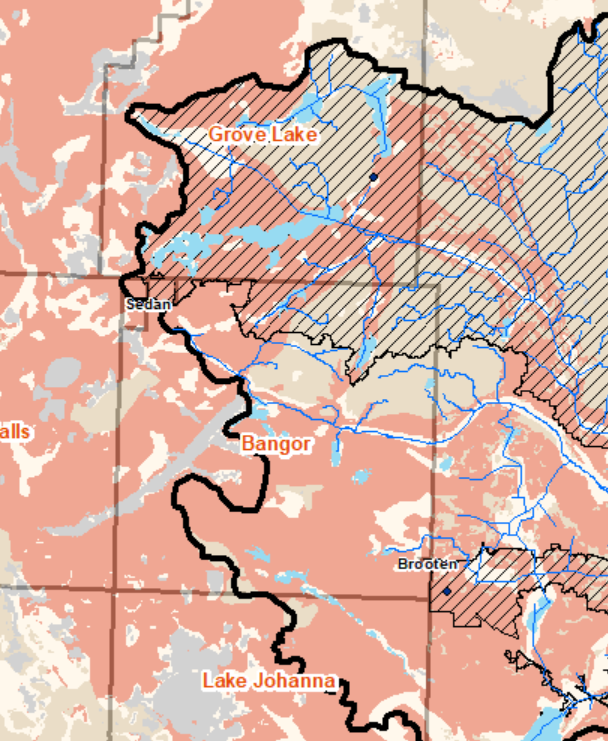
The hatched area shown on the map below is the priority area. If you are located in the cross hatched dark peach area there is a potential for 100% cost share not to exceed $2,500 and in the cross hatched light peach area cost share would be 75% not to exceed $500 per well. To learn more about this program see the flyer shown below.
2022 Pope SWCD Annual Report
The Pope Soil and Water Conservation District 2022 Annual Report publication is now available.
Irrigation Clinic to Be Held on March 6 in Greenwald
Stearns County Soil and Water Conservation District is co-hosting the Irrigators Clinic on Monday, March 6, 2023, at the Greenwald Pub. This event will be of interest to anyone who is
actively engaged in irrigation on agricultural lands and interested in soil health, farm economics, and research.
A great line-up of speakers has committed to participating in the event representing: University of Minnesota, Minnesota Department of Agriculture, Modern Farm Equipment, and Minnesota State Agricultural Center of Excellence.
Topics to be addressed during the day includes Managing Nitrogen for Corn Production in Irrigated Sands, Irrigation RCPP to Implement Innovative Irrigation Practices, Local Perspective on Cropland Irrigation Practices, Lesson Learned from Irrigation Management Research in Minnesota, Soil Moisture Sensors for Irrigation Systems, Crop Response to Extreme Temperature and Water, Conservation Economics on Minnesota Farms.
CEUs for Certified Crop Advisors (approval pending) will be offered.
Event registration begins at 9:00AM, with the program commencing at 9:15AM and concluding at 3:00PM. The cost to attend is $10 and lunch is included. Pre-registration is requested and can be completed online at: https://arcg.is/0L8Db8 (it is a Zero, not a O). If paying by check, please send a $10 check to Stearns SWCD Attention: Sharyn, 110 2nd St. Suite 128, Waite Park, MN 56387 by Monday, February 27, 2023. Registration at the door will increase to $20.
The event location is at Greenwald Pub 310 1st Ave North, Greenwald, Minnesota, 56335.
The event is sponsored by: MN Ag Water Quality Certification Program, Citizens Alliance Bank, EarthScout, Nutrien Ag Solutions, West Central Irrigation, Inc., Bonanza Valley State Bank, Pro-Ag Farmers Cooperative, Chippewa Valley Ethanol Company, Belgrade Coop Association, NutraDrip Irrigation Systems, Grand Irrigation, Inc., and Cold Spring Coop.
The event is organized by Stearns, Pope, Swift, Kandiyohi, and Douglas Soil and Water Conservation Districts and the Minnesota Department of Agriculture.
For more information contact Stearns County SWCD office at 320-251-7800 ext. 3 or visit https://www.stearnscountyswcd.net/irrigatorsclinic.
Sauk River Habitat Protection Program Informational Meetings
The Pope SWCD would like to share that landowners located in the Sauk River Watershed have a current opportunity through the Sauk River Protection Program in partnership with the Minnesota Land Trust.
There will be a meeting held on Wednesday, January 25 from 7 -9 pm and Wednesday, February 8th from 7-9pm at the Sauk Centre City Hall: 320 Oak Street S, Sauk Centre, MN 56378. Click on the information below to RSVP if you are interested.
https://mnland.org/2021/05/21/sauk-river-watershed-habitat-protection-restoration-program-2/

Pope SWCD September Meeting Updates
The Pope SWCD will meet on Wednesday, September 21, 2022 at 7:00 a.m. at the USDA Service Center. We will not meet at our regular scheduled time for our monthly meeting due to the conflict with the West Central Area II meeting. The board will attend that meeting instead on September 20, 2022.
The Pope SWCD will also meet on Tuesday, September 20, 2022 all day for the West Central Area II meeting in St. Anna. The majority of the board will be in attendance at this meeting.
If you have any questions please give our office a call. 320-634-5327
Public Input Wanted as County Updates Multi-Hazard Mitigation Plan
POPE COUNTY NEWS RELEASE
August 8, 2022
Public Input Wanted as County
Updates Multi-Hazard Mitigation Plan
Pope County residents, business owners, nonprofit members, and community leaders now have an organized opportunity to share how severe weather events impact their property and lives. There is also an opportunity to share their ideas on how to reduce the impact in the future.
The Pope County Office of Emergency Management is working with U-Spatial at the University of Minnesota Duluth to update the county’s Multi-Hazard Mitigation Plan (MHMP). The plan assesses the natural hazards that pose risk to the county, such as tornadoes, straight line winds, ice storms, blizzards, wildfire, flooding, and extreme temperatures and identifies ways to minimize the damage of future events. As the county works to update the plan, it wants to hear from the public.
The Pope County MHMP is a multi-jurisdictional plan that covers Pope County, including the cities of Brooten, Cyrus, Farwell, Glenwood, Long Beach, Lowry, Sedan, Starbuck, Villard, and Westport. The Pope County MHMP also incorporates the concerns and needs of townships, school districts, and area agencies or organizations participating in the plan. The plan will be updated by a planning team made up of representatives from county departments, local municipalities, school districts and other key stakeholders.
“Hazard mitigation planning is a central part of our emergency management program,” said Tim Riley, Pope County Sheriff and Emergency Management Director. “Understanding the natural hazards that can cause serious impact to our communities and taking action to reduce or eliminate the impact of future disasters makes us more resilient. Hazard mitigation helps us to break the cycle of damage and repair caused by things like flooding, ice storms, and severe wind events that can damage property, stress economies, and threaten life safety in our county.”
Examples of hazard mitigation include:
- improvement of roads and culverts that experience repetitive flooding
- construction of safe rooms at campgrounds, public parks, mobile home parks or schools to protect lives in the event of tornados or severe wind events
- burying powerlines that may fail due to heavy snow, ice, or windstorms
- ensuring timely emergency communication to the public through warning sirens and mass notification systems
- conducting public awareness and education campaigns to help people be prepared to take safe action before, during, or following a hazard event.
Some mitigation activities may be eligible for future FEMA Hazard Mitigation Assistance grant funding.
Public input is an essential part of the plan update. As part of the planning process, Pope County is seeking feedback from residents and businesses from across the county to incorporate into the plan:
- What are the natural hazards you feel pose the greatest risk to your community?
- What concerns do you have, and what sorts of actions or projects do you feel would help to reduce the damages of potential future events for your personal property, your community, or the county as a whole?
Comments, concerns, or questions regarding natural disasters and potential mitigation actions to be included into the plan update process should be submitted to Pope County Emergency Management by phone or email. Comments may also be submitted on the Pope County Emergency Management Facebook page where this news release will be posted.
There will be additional opportunities for public feedback throughout the planning process. A draft of the plan will be made available for public review prior to submission of the plan to the State of Minnesota. Future news releases will be shared with the media to notify the public of these opportunities.
The Federal Disaster Mitigation Act of 2000 (DMA 2000) requires counties to update their plan every 5 years to maintain eligibility for FEMA’s Hazard Mitigation Assistance (HMA) grant programs.
Contact
Tim Riley
Pope County Emergency Management Director
320-634-7797
Email: tim.riley@popecountymn.gov
Kim Joos
Pope County Deputy Emergency Management Director
Phone: 320-634-7798
Email: kim.joos@popecountymn.gov
Nitrate Water Testing Clinic At The Fair

Pope Soil and Water Conservation District (Pope SWCD) will be hosting a free water testing clinic Friday, August 5th from 12:00 pm to 4:00 pm at the Pope County Fair. Bring your water sample to the Pope SWCD booth in the Industrial Building at the fairgrounds for a free nitrate analysis. To receive best results, collect a minimum of one-half cup of room temperature water in a clean container within two hours of testing.
Nitrogen exists in the environment in both organic and inorganic forms. When in its inorganic form, ammonium (NH4) or nitrate (NO3), it is an essential element to plants. However, when considering water quality, nitrogen becomes a concern when in its nitrate form. Excessive nitrate concentrations in groundwater can be hazardous to human and environmental health. The Environmental Protection Agency (EPA) has set 10 mg/L as the maximum contaminant level (MCL) for nitrate-nitrogen in drinking water. The Minnesota Department of Health recommends that private wells receive nitrate testing at least once every two to three years. If nitrates have been previously detected or if an infant under six months will be consuming the water, testing should be conducted more frequently.
Nitrates most commonly enter groundwater through leaching or draining. Because nitrate does not attach to soil particles, it is easily moved by water. Therefore, as water filters through the soil, so do present nitrates. Some primary factors that have an effect on nitrogen leaching include: nitrogen rate, application timing, nitrogen sources, irrigation practices, age of site, and soil texture. The contamination can result from both anthropogenic (human caused) and natural sources. Although both can lead to hazardous conditions, it is often anthropogenic sources that force nitrate concentrations into dangerous levels. These sources include but are not limited to: fertilizer application, manure storage, and sewage disposal. There are available treatments used to rehabilitate contaminated water. However, prevention of nitrogen loss is the favored method in reducing nitrate concentrations in groundwater.
Rosholt Field Day To Be Held August 18th
To register click here: https://www.eventbrite.com/e/381067211287
Join us for a field day at the Rosholt Research Farm on the current research trials. The Rosholt Research Farm Field Day will be held on Thursday, August 18, 2022, from 10:00 a.m.-1:00 p.m.
A great line-up of speakers has committed to participating in the event representing: University of Minnesota, University of Minnesota Extension, Minnesota Department of Agriculture, and Pope and Stearns Soil and Water Conservation Districts.
Current research trials to be addressed during the field day include: Kernza perennial grain, nitrogen fertilizer applications, cover crop and living mulches, and irrigation water management practices.
Learn About:
-Nitrogen Budget for Irrigated Corn When Grown with Rye and Kura Clover
-Best Irrigation Management Strategies for Optimum Corn Production and Water Quality Protection
-Kernza-A Perennial Grain Crop for Cleaner Water and Improved Soil Health
Pre-registration is required. Event details can be found on Pope or Stearns Soil and Water Conservation District’s (SWCD) website at www.popeswcd.org or www.stearnscountyswcd.net. Participants are encouraged to register by August 12th using the online Eventbrite link or calling 320-634-5327.
The event is organized by Pope and Stearns Soil and Water Conservation Districts and the Minnesota Department of Agriculture.
Funding for the work at Rosholt has been funded by the Minnesota Environment and Natural Resources Trust Fund as recommended by the Legislative-Citizen Commission on Minnesota Resources (LCCMR), Minnesota Department of Agriculture Agricultural Fertilizer Research and Education Council (AFREC), and the Clean Water Fund as a part of the Clean Water, Land, and Legacy Amendment. For more information visit www.lccmr.leg.mn and www.legacy.mn.gov/clean-water-fund.
For more information contact Holly Kovarik, Pope SWCD at 320-634-5327, www.popeswcd.org.
Plantskydd Available at Pope SWCD
Plantskydd was originally developed in Sweden to protect their large tree plantations while remaining in compliance with their firm environmental laws, now it is produced in the United States. It is a dried blood-based (porcine or bovine) animal repellent that contains no synthetic additives and therefore is the first animal repellent to be listed by the OMRI the Organic Materials Review Institute making it suitable in the production of organic food and organic gardening by the USDA. In the United States, “dried blood” is an EPA (Environmental and Protection Agency) exempted product/minimum risk pesticide. The science behind it is simple. Plantskydd is an order based repellent that prey animals associate with the smell of predatory activity triggering a fear-based response causing the prey animal to avoid the associated areas. The National wildlife Research Center has found that over 20 products tested “repellents with active ingredients that emitted sulfurous odors i.e., blood meal or egg solids, generally provided the best results.” Not only that but because Plantskydd’s active ingredient is blood-based it also a source of fertilizer in the form of nitrogen. A farmer from Pennsylvania had this to say after the use of it “I normally harvest 5 or 6,000 lbs of the corn every year but I didn’t know how much I was losing until I harvested 20,000 lbs of sweet corn on my 2 acres after using Plantskydd last summer. And that’s with a single application.” Furthermore the repellent is rain and snow resistant and does not require for immediate re-application after rain or snow fall. Prime application occurs in before animal browsing begins-in spring or fall and treat new growth during the active growing season or every 3 to 6 weeks. Granular can be applied anytime and reapplied every 4 to 6 weeks and must be watered to active. Liquid concentrate is most effective against large herbivores such as deer, and comes in pre-mixed or concentrate and granular is most effective against small herbivores such as rabbits or voles.

This Earth Day, we are grateful for our region’s natural resources
Every Earth Day, we at the Pope Soil and Water Conservation District reflect on the wonderful natural resources we get to enjoy in Pope County. Our District is grateful for the opportunity to work with members of the community to facilitate voluntary initiatives to conserve land, water, forests and wildlife in our area. We are one of 88 Soil and Water Conservation Districts (SWCDs) across the state – and nearly 3,000 across the nation – that provide a neighborly presence to help preserve and protect the natural resources that we all love.
The Pope SWCD has been around for more than 73 years, and recent highlights of our work include a ravine stabilization project within the City of Glenwood, erosion and sediment control projects in the Lake Minnewaska and Lake Emily subwatersheds, tree plantings and grass seedings throughout the County. These are just a few examples of the ongoing work of our SWCD.
SWCDs are local units of government that carry out natural resource management programs at the local level. We provide voluntary, incentive-driven approaches to landowners for better soil and cleaner water in the State of Minnesota. Private landowners – using financial and technical assistance from local SWCDs – are implementing a wide variety of conservation practices including preventing soil erosion, planting shelterbelts and buffers, and restoring wetlands.
Born in the wake of the Dust Bowl, SWCDs have been involved in delivering conservation across America for more than 75 years. Because Minnesota has a wide variety of landscapes and conservation needs, each district operates at the direction of locally elected board supervisors. This local perspective allows SWCDs to manage the resources and serve the needs of the citizens in their district.
Soil and Water Conservation District staff and supervisors build partnerships with public and private, local, state and federal entities in an effort to develop locally-driven solutions to natural resource concerns. We work with landowners every step of the way from planning to implementation.
Our work results in cleaner water, healthier wildlife habitat, better soil, and a collaborative relationship with the community. What a great thing to celebrate this Earth Day.
To learn more about how your SWCD can help you, visit our website at www.popeswcd.org.
2022 Tree Pick Up Times Announced
LOCAL OFFICIALS OF POPE SWCD MEET WITH STATE LEGISLATORS
Local conservation leaders advocated for a new state funding initiative for Soil and Water Conservation Districts at a recent legislative briefing and meetings at the State Capitol March 9-10 in St. Paul.
Keith Nygaard, Randy Pederson, Randy Mitteness, D. Gary Reents, and Holly Kovarik, from Pope Soil and Water Conservation District, joined a group of other officials from the state’s Soil and Water Conservation Districts (SWCDs) to gather support for conservation district funding from the state. SWCDs are seeking $22 million per year in local government SWCD Aid through the Department of Revenue. The funding would get SWCDs statewide closer to fulling critical conservation needs and increasing the pace of progress toward clean water and healthy soil goals.
“SWCDs are a primary source of conservation information, support, and program management for landowners and other local units of government,” said D. Gary Reents of Glenwood. The SWCD Aid proposal being considered by legislators this session is absolutely critical to the future of conservation districts in the state, noted Reents. The legislation has received bipartisan support and is also included in Governor Tim Walz’s supplemental budget. “We have to work hard to make sure the state’s commitment to sharing in the funding needs of SWCDs doesn’t fall by the way-side. Soil and Water Conservation Districts play an integral role in enhancing Minnesotan’s quality of life through conservation on private lands, which yields environmental, wildlife and aesthetic benefits to the public,” Reents said.
Last week, D. Gary Reents, Randy Mitteness, Keith Nygaard, Randy Pederson, and Holly Kovarik met with local legislators Representative Paul Anderson, Senator Torrey Westrom, and Representative Jeff Backer.
The event was sponsored by the Minnesota Association of Soil and Water Conservation Districts.
SWCDs fill the crucial niche of providing land and water conservation services to owners of private lands. For more information on the Pope Soil and Water Conservation District, please call 320-634-5327 or visit www.popeswcd.org.
Chippewa River Watershed Association Plan Kick Off and Annual Meeting
The Chippewa River Watershed partners have worked together for many years, going as far back as 1998. A group called the Chippewa River Watershed Project (CRWP) has worked since that time to improve water quality in the watershed. This group completed watershed monitoring and worked to secure funding to do Best Management Practices (BMPs) and conduct education and outreach across the watershed. This group recently reorganized and is now called the Chippewa River Watershed Association (CRWA).
I have heard from some constituents that are wondering about the status of this group. About three years ago the partnership worked to reorganize its Joint Powers Agreement. The partnership previously only included the Counties and the group worked to revise the agreement to include Soil and Water Conservation Districts (SWCDs). This group also began efforts to prepare for an application to the Board of Water and Soil Resources (BWSR) for the “One Watershed One Plan” program. The CRWA was successful in attaining a planning grant from BWSR.
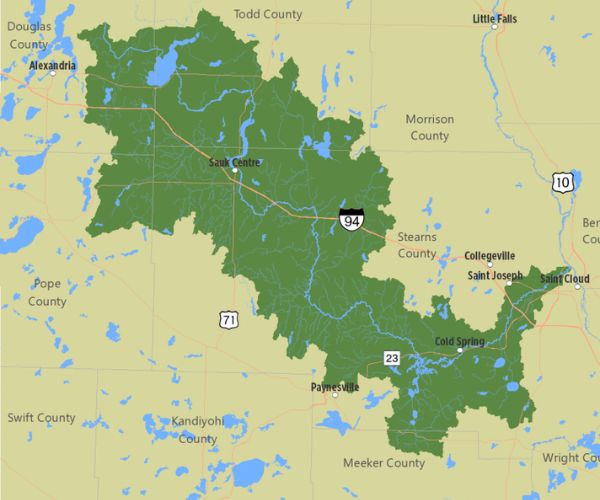
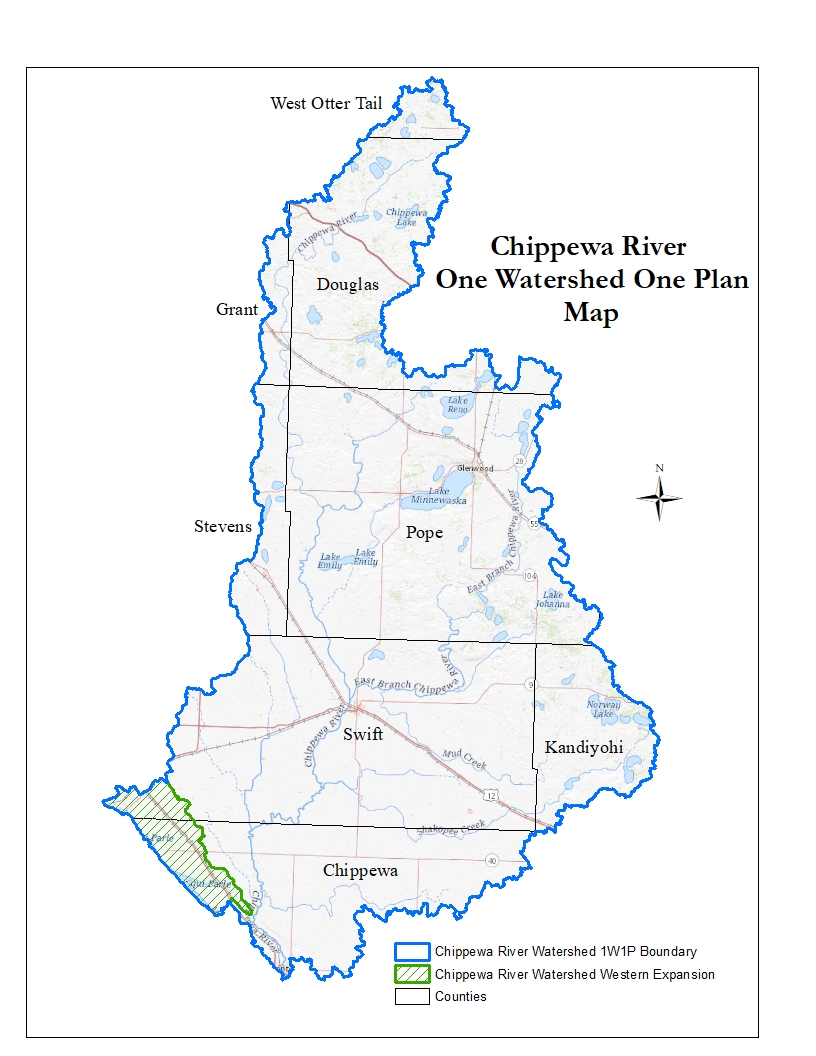
This program allows counties to transition from county-based water plans to watershed-based planning. The planning area for the Chippewa River One Watershed One Plan includes portions of Otter Tail, Grant, Douglas, Stevens, Pope, Swift, Chippewa, and Kandiyohi counties. County and SWCD Boards in each of these counties have entered into a Joint Powers Agreement for the purpose of developing a watershed plan and to restore and protect the water and soil resources in the Chippewa River Watershed planning area. Pope Soil and Water Conservation District staff are acting on behalf of the partnership to coordinate this effort and to manage the fiscal duties.
The group has planned a public kick off and annual meeting on Tuesday, April 5th at 5:30 p.m. at the Minnewaska House in Glenwood, Minnesota. Please RSVP by March 28. This meeting is an opportunity for citizens that reside in the watershed to provide feedback and learn more about monitoring, funding opportunities, and status of work of the Chippewa River Watershed Association and partners. This meeting will include a meal. For more information give Holly Kovarik a call at 320-634-5327 or email holly.kovarik@mn.nacdnet.net. Register here at: https://bit.ly/3HfBymN
This planning effort will take approximately two years to complete and at its conclusion will provide state funding for conservation projects that are considered a priority for improving and protecting our resources as identified and agreed upon by the CRWA members.
Irrigators Clinic Announced for March 17th
Register online at: bit.ly/35P9eux
Greetings Irrigators,
We have also been working on continuing education credits. For those that are interested in this feature this update will potentially provide 4.5 CEUs in Soil & Water Management (approval pending).

Attention Irrigators! The annual Irrigators Clinic will be held on Thursday, March 17th from 9AM-3PM at McKinney’s in Benson, MN.
Agenda topics include:
- Soil Health & Strip-Tillage
- Chemigation Permit Requirements
- Irrigation Research/Management Strategies
- Climate Condition Updates
- Funding Opportunities
- Soil Health Champion
Pre-registration is required. Register online at bit.ly/35P9eux and then send in your payment.
Registration Details:
- Register by Monday, March 7 to Pope SWCD
- $10 fee (includes meal ticket)
- Checks Payable to:
- Pope SWCD
- Mail Payment to:
- Pope SWCD
Attn: Holly Kovarik
1680 Franklin St. N.
Glenwood, MN 56334
Registration at the door – $20 (meal cannot be guaranteed)
For questions or virtual option, contact Holly Kovarik with the Pope SWCD at (320) 634-5327.
This event is hosted by the Stearns County SWCD, Pope SWCD, Douglas SWCD, Kandiyohi SWCD, Minnesota Department of Agriculture with support from the Clean Water, Land and Legacy Amendment.
Local sponsors will be on site with informational booths and technologies.
Tree Availability Update 1-25-2022
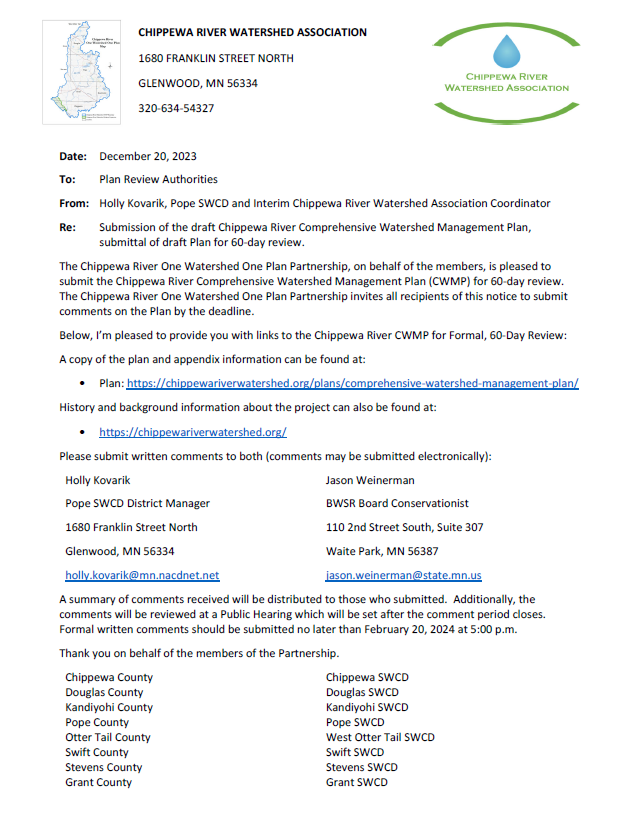
Invitation to Submit Priority Concerns for Chippewa River Watershed One Watershed, One Plan Planning Process
Date: January 21, 2022
To: Local and Agency Representatives in the Chippewa River One Watershed, One Plan Planning Area
From: Pope Soil and Water Conservation District (SWCD) acting on behalf of the Chippewa River One Watershed, One Plan Partnership
Re: Invitation to Submit Priority Concerns for the Chippewa River One Watershed, One Plan
The Chippewa River Watershed has been selected by the Minnesota Board of Water and Soil Resources (BWSR) for the One Watershed, One Plan program. This program allows counties to transition from county-based water management planning to watershed-based planning. The planning area for the Chippewa River One Watershed, One Plan includes portions of Otter Tail, Grant, Douglas, Stevens, Pope, Swift, Chippewa, and Kandiyohi counties. County and SWCD Boards in each of these counties have entered into a Joint Powers Agreement for the purpose of developing a watershed plan to restore and protect water and soil resources in the Chippewa River Watershed planning area.
The purpose for this notice is to invite all recipients of this notice to submit, within 60 days, any water and soil management issues they feel the process and resulting plan should address (e.g. land use plans or special ordinances, special projects/plans like wastewater facilities, well head protection plans, etc. that could benefit from having a plan connection).
Please submit the requested information (by mail or email) by March 22, 2022 and direct inquiries to:
Holly Kovarik
Pope SWCD
1680 Franklin Street North
Glenwood, MN 56334
Email address: holly.kovarik@mn.nacdnet.net
A public information kick-off meeting sponsored by the Chippewa River One Watershed, One Plan Partnership will be held in April 2022. Additional information will be distributed when plans are finalized.
Planning area map attached for reference
Eight Named As Finalists for State’s 2021 Outstanding Conservationist Award
ST. PAUL — The Minnesota Association of Soil and Water Conservation Districts (MASWCD) has named the finalists for the state’s 2021 Outstanding Conservationist Award.
The winner will be announced at the 85th annual MASWCD Annual Meeting, at a luncheon on Dec. 14. The award ceremony is the culminating event of the three-day conference, Dec. 12-14, at the Doubletree by Hilton Bloomington – Minneapolis South in Bloomington, Minn. The award program recognizes farm families, individuals, conservation organizations, and other groups for their accomplishments in implementing conservation practices and improving Minnesota’s natural resources.
The program is sponsored by MASWCD, with support from The Farmer magazine. Editors and news directors are encouraged to follow up with the Soil and Water Conservation District contacts listed for feature and interview opportunities. The information was gathered from nomination forms submitted to MASWCD by individual conservation districts. The finalists are noted below, with additional background information attached. Higher resolution photos are available upon request.
| MASWCD Area | Finalist | Nominating SWCD | SWCD Contact |
| Northwest Area 1 | Ryan Hough and Michael Hough Rothsay MN | Wilkin SWCD | Don Bajumpaa, Manager 218-643-2933 dbajumpaa@co.wilkin.mn.us |
| West Central Area 2 | Nathan and Angie Walter Westport MN | Pope SWCD | Holly Kovarik, Manager 320-634-5327 holly.kovarik@mn.nacdnet.net |
| Northeast Area 3 | Burnell Peterson and Ann Carlander Wrenshall MN | Carlton SWCD | Brad Matlack, Manager 218-384-3891 bradmatlack@carltonswcd.org |
| Metro Area 4 | Mallery Jerseys, Inc. Shafer MN | Chisago SWCD | Craig Mell, Administrator 651-674-2333 craig.mell@mn.nacdnet.net |
| Southwest Area 5 | Michael and Mary Hewitt Walnut Grove MN | Redwood SWCD | Scott Wold, Administrator 507-637-2427 x3 scott_w@co.redwood.mn.us |
| South Central Area 6 | KD2 Farms Karson Duncanson Kameron Duncanson Mapleton MN | Blue Earth SWCD | Jerad Bach, Manager 507-345-4744 jerad.bach@blueearthswcd.org |
| Southeast Area 7 | Tom and Shirley Gerard Jeff Gerard Judy Tollefsrud Spring Grove MN | Root River SWCD | Dave Walter, Manager 507-724-5261 goosey10@hotmail.com |
| North Central Area 8 | Hollister Family Farm Abe and Brea Hollister Brainerd MN | Crow Wing SWCD | Melissa Barrick, Manager 218-828-6197 melissa@cwswcd.org |
-More-
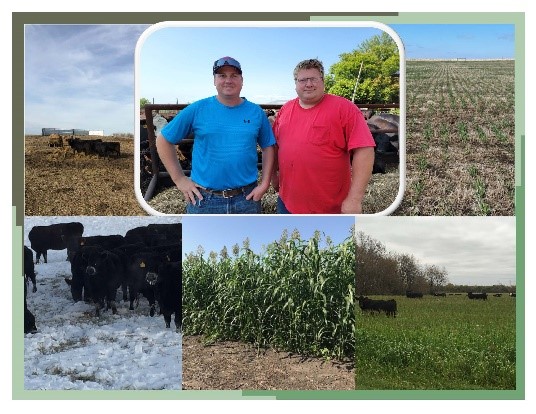
| Northwest Area 1 Ryan Hough and Michael Hough Rothsay MN nominated by Wilkin SWCD Background on brothers Ryan Hough and Michael Hough: Brothers Ryan Hough & Michael Hough of Rothsay, MN, farm 1400 acres of row crops and run a 600 head cattle operation in the northeast corner of Wilkin County. They have a diverse crop rotation of corn, soybeans, sunflowers, wheat, barley, and alfalfa. They started integrating full season cover crops into the no-till operation to get the benefit of grazing the cover crop after the cash crop was harvested. This allows the Hough Brothers to extend the grazing period beyond the fall frost. They have also switched from conventional grazing to rotational grazing their pastures. The Hough Brothers have utilized the Environmental Quality Incentives Program (EQIP) and Conservation Stewardship Program (CSP) programs, along with grazing Reinvest in Minnesota Reserve (RIM) easements, and are currently in the process of getting their Ag Water Quality Certification. | |
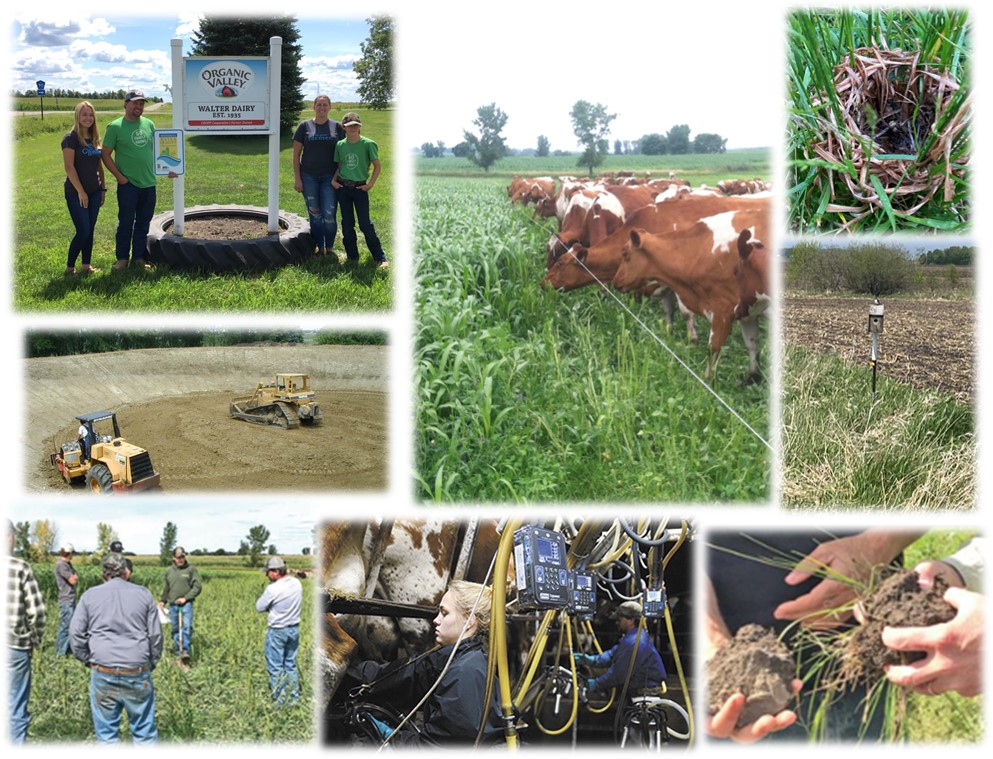
| West Central Area 2 Nathan and Angie Walter Westport MN nominated by Pope SWCD Background on the Walters: Nathan and Angie Walter of Westport, Minnesota, operate a 390-acre Organic Minnesota Department of Agriculture Ag Water Quality Certified family dairy farm raising corn, hay, rye, barley, oats, and cover crops for use on their farm. They milk 100 Guernsey/Red Holstein/Norwegian Cross Cows, raise 50 heifers, 20 calves, broiler chickens, and laying hens. They have implemented: an ag waste storage facility, nutrient management plan, shelterbelt, cover crops, grazing plan, reduced tillage, cover crops, no-till, and soil health practices. The Walters are active members in their community, Sustainable Farming Association (SFA), Organic Valley, 4-H and serve in leadership roles in these organizations. They are mentors for the SFA Dairy Grazing Apprenticeship program. The Walter’s are a premier example of regenerative agriculture and the Pope SWCD is proud to nominate them. | |

-More-
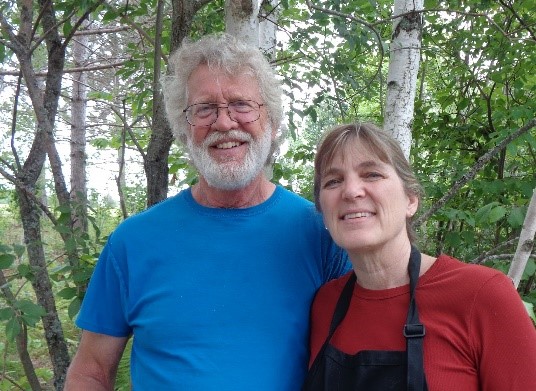
| Northeast Area 3 Burnell Peterson and Ann Carlander Wrenshall MN nominated by Carlton SWCD Background on Burnell Peterson and Ann Carlander: Burnell Peterson and Ann Carlander operate a Bed and Breakfast on their land near Wrenshall. Burnell has worked with the SWCD for decades to improve forest health and pollinator habitat. Recently, in cooperation with the SWCD, Burnell has thinned out his forest to give the remaining trees room to thrive. He mills the logs into lumber himself. Burnell and Ann worked with the district to establish a native grass and flower meadow for pollinator habitat. They are already noticing more bee and butterfly activity. Burnell and Ann enjoy caring for their land and sharing it with others. | |
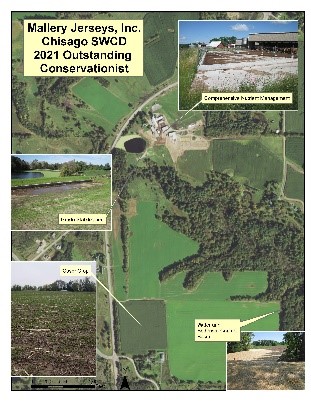
| Metro Area 4 Mallery Jerseys, Inc. Shafer MN nominated by Chisago SWCD Background on Mallery Jerseys, Inc: The Mallery family are owners and operators of Mallery Jerseys, Inc. They operate a 485-acre dairy farm milking on average 250 head, as well as producing corn for silage and grain along with hay to feed their dairy cattle. The Mallerys started farming in Shafer, MN, along the escarpment of the St. Croix River, in the 1950s. Due to their unique position and close vicinity to a National Scenic Riverway, the Mallerys have always seen conservation as important to their operation. They have implemented a wide range of practices, including cover crops, buffers, diversions, water and sediment control basins, no till, nutrient management, and integrated pest management. In 2020, Mallery Jerseys, Inc. achieved certification in the Minnesota Agricultural Water Quality Conservation Program. | |

-More-
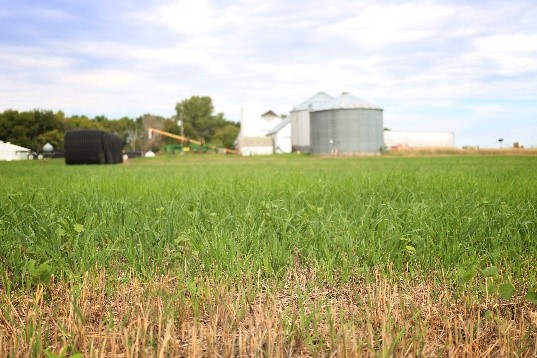
| Southwest Area 5 Michael and Mary Hewitt Walnut Grove, MN nominated by Redwood SWCD Background on the Hewitts: Michael & Mary Hewitt of Walnut Grove operate a large grain operation on the banks of Plum Creek raising corn, soybeans, and wheat. Mike grew up farming with his father raising crops and hogs and began farming full time in 1989. Mike has always been interested in trying new methods and built his own strip-till unit before the equipment was available. The Hewitt’s stumbled upon no-till when Mike and his father were helping a neighbor plant soybeans in a wet spring when tillage was not an option. Because of that experience, the Hewitt’s have stuck with no-till in their operation as well as strip-till and cover crops. The Hewitts have made strides implementing conservation and are leaders in farmer-to-farmer networking. | |

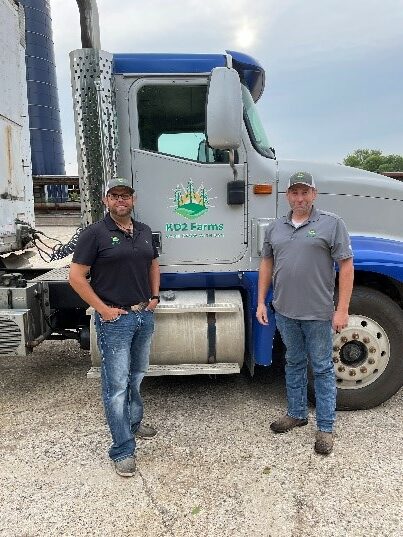
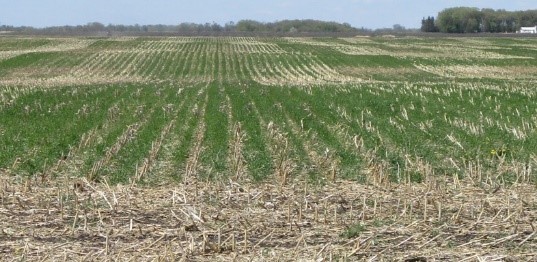
| South Central Area 6 KD2 Farms Karson Duncanson and Kameron Duncanson Mapleton, MN nominated by Blue Earth SWCD Background on KD2 Farms: KD2 Farms, of Mapleton are fourth generation farmers. When Karson and Kameron Duncanson took over the family farm five years ago, they continued their father’s conservation efforts by planting over 1,000 acres of cover crops, switching to strip-till practices on their corn fields and moving their bean fields to 100 percent no-till. Before Minnesota’s Buffer Law was written into law, KD2 Farms had enrolled 20 acres of their land into the Conservation Reserve Program for filter strips and grassed waterways, making them compliant before most. They know using some of these best management practices can be difficult to transition to, but once you make the move, you’ll be glad you did. They want to provide a good example to future generations on how to farm properly and how to be good stewards of the land. | |
-More-
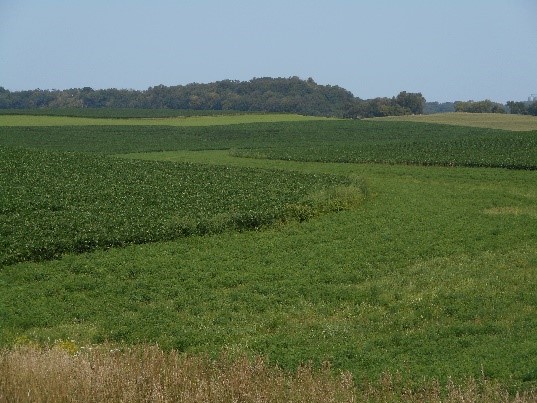
| Southeast Area 7 Tom and Shirley Gerard, Jeff Gerard, Judy Tollefsrud Spring Grove MN nominated by Root River SWCD Background on the Gerard Family: The Gerard Family of Spring Grove operate a diversified crop and livestock operation with corn, soybeans, cereal grains and hay along with cover crops. In addition, they custom feed 300-400 heifers from calves to freshening for a local dairy. The original farm has been in the family since the early sixties and consists of a mix of forestland, rotational pasture, Conservation Reserve Program (CRP), and crop land. Over the years, the Gerards have implemented several grade stabilization structures, feedlot improvements, contour strips, CRP, and a couple miles of waterway in addition to constructing numerous other best management practices to address the resource concerns on their farm. The Gerards have been diligent advocates for conservation and have implemented many practices over the years because it’s “the way it should be done” | |

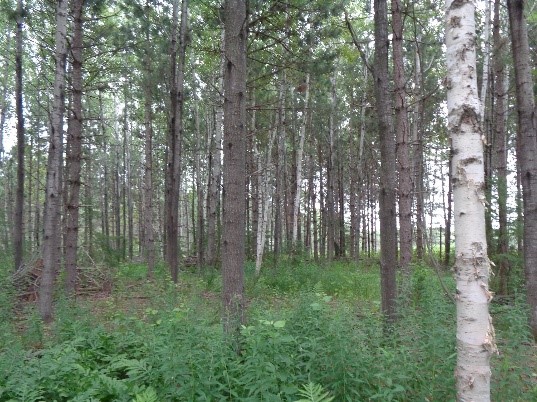
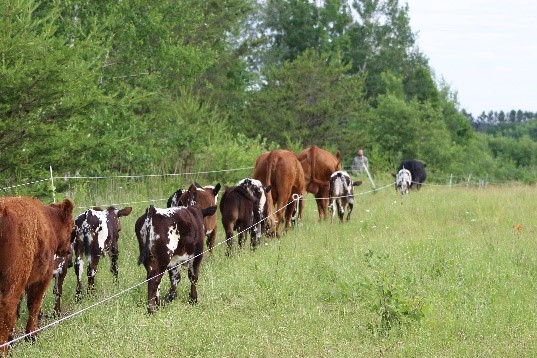
| North Central Area 8 Hollister Family Farm – Abe and Brea Hollister Brainerd MN nominated by Crow Wing SWCD Background on Hollister Family Farm: The Hollister Family Farm is located south of Brainerd near the Nokassippi River (a 46.5-mile-long tributary to the Mississippi River). The Hollisters have transformed an 80-year-old highly intensive soybeans and corn farmland into perennial vegetation with 40 paddocks for cattle and sheep to rotate through. These newly formed lush perennial grasses allow Galloway, British White, and Lowline Red Angus cows and sheep to eat healthy forage while providing nutritious, sustainable grown meat to their customers. They raise 60 cows on 120 acres to the direct consumer. The intense rotational management system has increased the farm soil organic matter and improved water percolation. The Hollisters partnered with the NRCS, SWCDs, and Happy Dancing Turtle to provide outreach help to individual farmers in the Pine River Watershed to implement soil health practices. | |

Nathan and Angie Walter Selected as 2021 Outstanding Conservationists

Nathan and Angie Walter of Westport, Minnesota were selected as the 2021 Pope County Outstanding Conservationists. They have two children Laureen and Levi and they attend Osakis school. They operate a 390-acre organic dairy farm raising corn, hay, rye, barley, oats, and cover crops for use on the farm. They milk 100 Guernsey/Red Holstein/Norwegian cross cows, raise 50 heifers, 20 calves, broiler chickens, and laying hens.
The Walters have implemented many conservation practices including: an ag waste facility, nutrient management plan, shelterbelt, cover crops, grazing plan, reduced tillage, no-till, and soil health practices. The operation is also certified through the Minnesota Department of Agriculture Water Quality Certification Program.
The Walters are active members in their community, Sustainable Farming Association, Organic Valley, 4-H, and serve in leadership roles in these organizations. They are mentors for the Sustainable Farming Association Dairy Grazing Apprenticeship program. The Walter’s are a premier example of regenerative agriculture and the Pope SWCD was proud to select them as this year’s Outstanding Conservationists.
The Walters will be honored by Pope County and Pope SWCD later this year at a Commissioner’s meeting. They will also be recognized at the Minnesota Association of Soil and Water Conservation District’s Annual Convention on December 14, 2021 in Bloomington. Congratulations Walter Family!
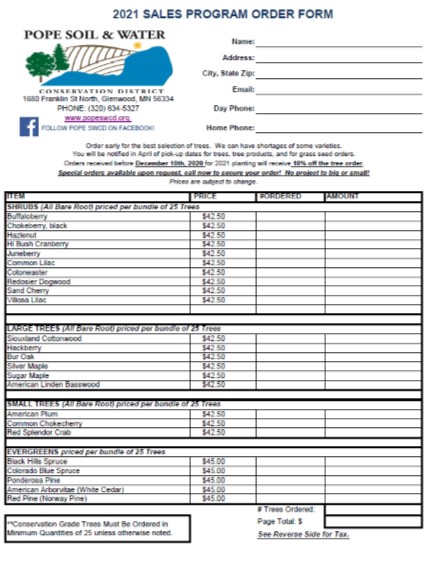
2022 Sales Program Order Form Now Available
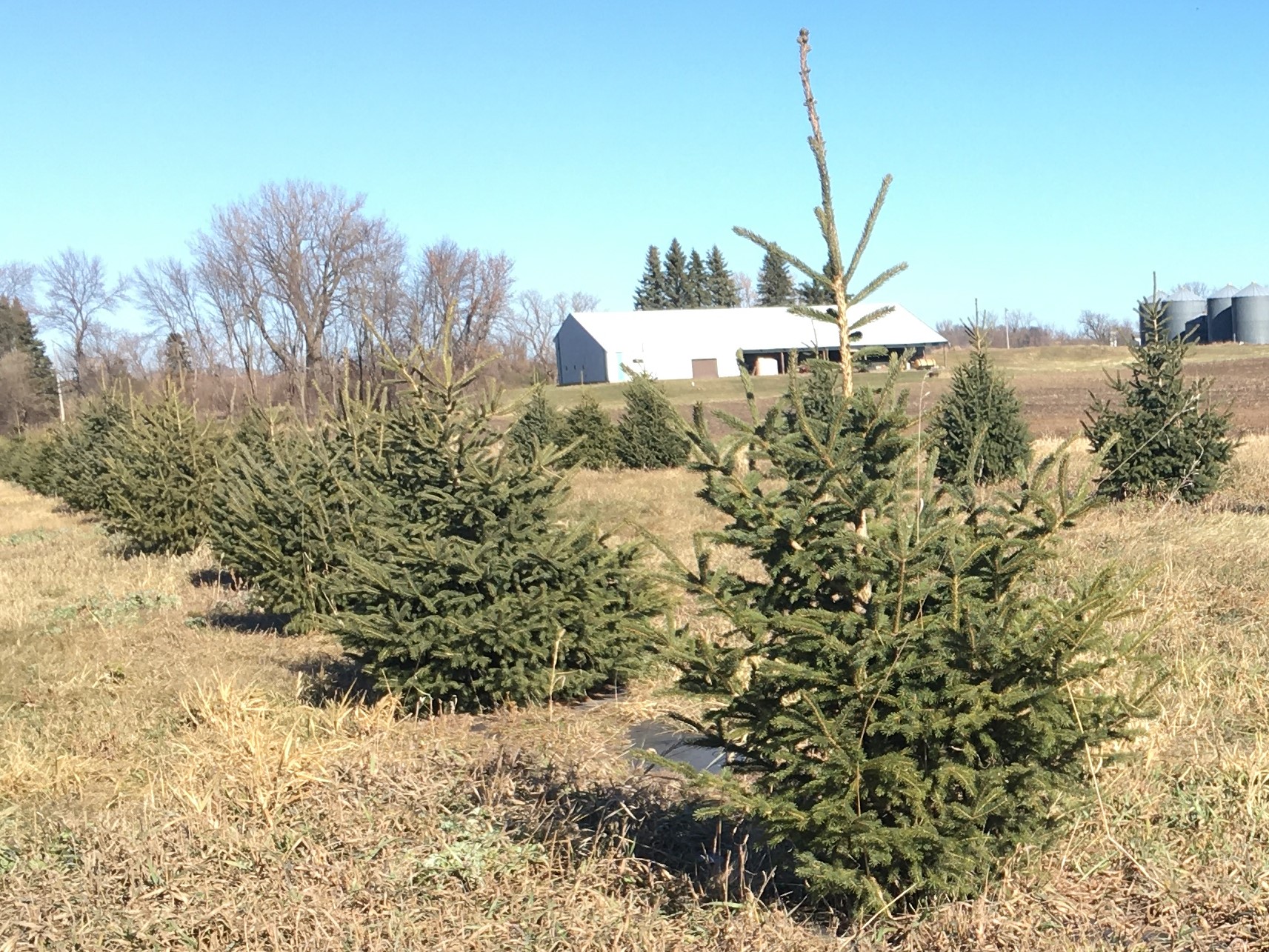
It is now time to order trees and shrubs for planting in the spring of 2022. Order early for the best selection of trees and shrubs and to ensure availability. Landowners will be notified for pickup of trees in April. If you are interested in a full planting plan call and ask for Kelly at 320-634-5327. Fall and winter is a great time to plan for those spring projects.
FREE WATER TESTING CLINIC AT THE FAIR
Pope Soil and Water Conservation District (Pope SWCD) will be hosting a free water testing clinic Friday, August 6th from 12:00 pm to 4:00 pm at the Pope County Fair. Bring your water sample to the Pope SWCD booth in the Industrial Building at the fairgrounds for a free nitrate analysis. To receive best results, collect a minimum of one-half cup of room temperature water in a clean container within two hours of testing.
Nitrogen exists in the environment in both organic and inorganic forms. When in its inorganic form, ammonium (NH4) or nitrate (NO3), it is an essential element to plants. However, when considering water quality, nitrogen becomes a concern when in its nitrate form. Excessive nitrate concentrations in groundwater can be hazardous to human and environmental health. The Environmental Protection Agency (EPA) has set 10 mg/L as the maximum contaminant level (MCL) for nitrate-nitrogen in drinking water. The Minnesota Department of Health recommends that private wells receive nitrate testing at least once every two to three years. If nitrates have been previously detected or if an infant under six months will be consuming the water, testing should be conducted more frequently.
Nitrates most commonly enter groundwater through leaching or draining. Because nitrate does not attach to soil particles, it is easily moved by water. Therefore, as water filters through the soil, so do present nitrates. Some primary factors that have an effect on nitrogen leaching include: nitrogen rate, application timing, nitrogen sources, irrigation practices, age of site, and soil texture. The contamination can result from both anthropogenic (human caused) and natural sources. Although both can lead to hazardous conditions, it is often anthropogenic sources that force nitrate concentrations into dangerous levels. These sources include but are not limited to: fertilizer application, manure storage, and sewage disposal. There are available treatments used to rehabilitate contaminated water. However, prevention of nitrogen loss is the favored method in reducing nitrate concentrations in groundwater.
Rosholt Field Day Set for August 19th

Pope SWCD Board Meeting November 16, 2021
The Pope SWCD Board of Supervisors will meet at their monthly meeting time on November 16, 2021 at 7 a.m. at the USDA Service Center at 1680 Franklin Street North, Glenwood, MN 56334. The pandemic declaration has now expired in Minnesota however USDA has a COVID-19 Screening upon entry. We ask that if you are a member of the public and are planning to attend the meeting to notify the District Manager by calling 320-634-5327 or by email at holly.kovarik@mn.nacdnet.net to complete the COVID screening. If you arrive at the meeting without priori notice you will be presented with COVID questionnaire prior to entry. There will not be a virtual option per the Minnesota Open Meeting Law requirements now that the Emergency Declaration has expired.
Plantskydd For Purchase
Plantskydd is a non-toxic, chemical free organic repellent used to deter deer, elk, moose, rabbits, voles, squirrels and chipmunks from browsing on vegetation. It is not harmful to pollinators, animals or the environment. It is safe for use in protecting vegetables, fruits, legumes and other food crops as well as trees, bushes and flowers. Its active ingredient (porcine or bovine dried blood) is also an organic fertilizer. Plantskydd works by releasing an order that browsing animals associate with predator activity. These browsing animals will avoid the plants before they take a bite.
Plantskydd should be applied in above freezing temperatures before browse begins in spring and the liquid formulation can last up to 4 months during the growing season. It should be reapplied to new growth every 2-4 weeks. It is rain resistant if allowed to dry first for 24 hours. Plantskydd should not be applied directly to the edible parts of fruits and vegetables. It can be sprayed on fruit tree foliage but avoid treatment while buds are forming. Plantskydd can last up to 6 months on winter dormant plants.
If interested in this product, the Pope SWCD has the liquid, soluble-powder concentrate and granular formulas available for purchase.
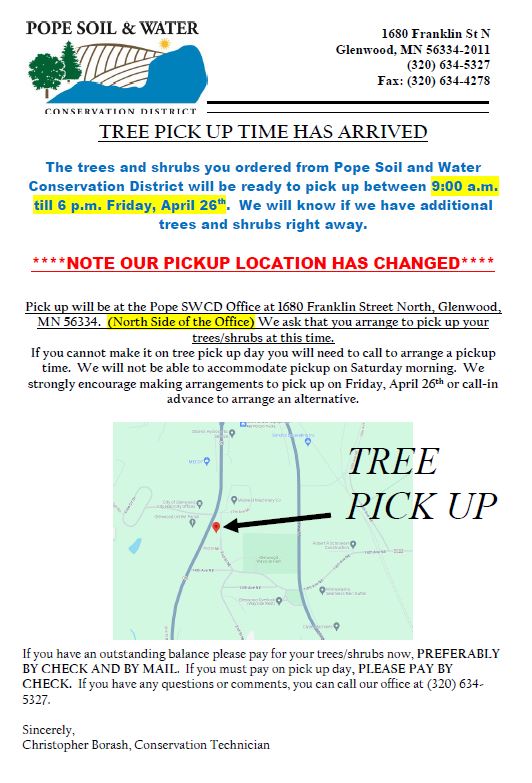
TREE PICK UP DATES SET
The trees and shrubs that were ordered from Pope Soil and Water Conservation District will be ready to pick up between 3 p.m. and 4:30 p.m. on Friday, April 30th and 8:00 a.m. till Noon on Saturday, May 1st.
Pick up will be at the Karen Erickson Farm 19381 270th Ave, Starbuck, MN 56381. A map of the pickup location printed below. We ask that you arrange to pick up your trees/shrubs at this time.
WALK IN ACCESS PROGRAM ENROLLMENT OPEN

Landowner enrollment has now begun for the Walk-In Access (WIA) program. The 2021 sign-up goes from March 15 to May 14. Since 2011 its purpose has been to pay private landowners for allowing the public to hunt on their land. The land must be a minimum of 40 acres with high-quality natural vegetation cover. Similar vegetation cover can be found on land already enrolled in conservation programs such as Conservation Reserve Program (CRP) or Reinvest in Minnesota (RIM). The use of the land is only allowed for hunting from Sept. 1 through May 31.
Walk-In Access has expanded through Minnesota and now includes 50 counties and covers 30,000 acres for hunters. If you are interested in using WIA land, you must pay the $3 permit when purchasing your hunting license.
Benefits for enrolling include:
- 2021 sign-up has an increased payment rate of $18/acre.
- Contracts are only 1 to 3 years long.
- MN DNR Conservation Officers enforce hunting laws.
- Can be an additional pay to existing conservation programs such as CRP or RIM.
- DNR will set up and provide signs around property enrolled in the program.
- Access to additional habitat for hunters to enjoy. Also giving an opportunity for new hunters to go to.
Pope County has been able to be a part of this program for many years and we hope to continue this partnership. Our office provides Minnesota DNR Walk-In Access mapping books if anyone is looking for a location to hunt. If you have any questions about the WIA program please contact Pope SWCD and ask for Nicole Brede at 320-634-5327.
Pope SWCD Recognized with Environmental Excellence Award
We are excited to announce that Pope SWCD is the recipient of the 2021 Minnesota Erosion Control Association (MECA) Environmental Excellence Award for our work over the past several years in the Lake Minnewaska sub watershed project area.
Ross Reiffenberger, West Central Technical Service Area Engineer, nominated Pope SWCD for this award. From his nomination letter, “For years, the Pope SWCD has been working with landowners to educate and install erosion control practices on their land.” Since just 2014, $1,173,300 has been invested in the protection efforts for Lake Minnewaska from the Board of Soil and Water Resources (BWSR) state funded resources including the Clean Water Fund. It should be noted that some projects leveraged federal funding through the Natural Resources Conservation Service which would be in addition to the state funding shown. The SWCD in partnership have implemented 54 practices with 13 new ones in the planning phase.
The Pope SWCD is currently working with the City of Glenwood on a major ravine repair project.Thank you to Ross Reiffenberger and MECA for this recognition. It takes a village to be successful and we are fortunate here in Pope County we have a great community and partners. To learn more about MECA visit: https://mnerosion.org/
To learn more about the Clean Water Fund visit: https://www.legacy.mn.gov/clean-water-fund
Pictured below: Pope SWCD Staff Nicole Brede, Holly Kovarik, Jessica Hoheisel, Kelly Erickson. Pope SWCD Board Keith Nygaard, Tom Talle, Randy Pederson, D. Gary Reents, and Randy Mitteness

Virtual Manure Management Field Day a Success!
The Pope and Stearns SWCDs worked together to put together a Virtual Manure Management Field Day which was held on January 7th, 2021. The event had over 100 people registered.
During the virtual event, there were live interviews from Greg Vold, co-owner of Dorrich Dairy, Tim Woeste, co-owner of Upper Midwest Pumping, LLC, and Kevin Wolter, Business Development Manager, Bazooka Farmstar. There were research updates from University of Minnesota Extension staff members Melissa Wilson on manure management, Jodi DeJong-Hughes on tillage, and Anna Cates on soil health. There was also drone footage featuring the application of manure taking place on Dorrich Dairy.
A special thank you to Minnesota Department of Agriculture for sponsoring the event through the Minnesota Agriculture Water Quality Certification Program funding via the Clean Water Fund. Thank you Dorrich Dairy, Stearns SWCD, University of Minnesota Extension, Upper Midwest Pumping/Woeste Custom Harvesting, and Bazooka Farmstar.
Virtual Manure Management Field Day – Zoom Meeting (01.08.2021) – YouTube
Conservation Reserve Program Sign Up to start on January 4, 2021
CRP – General -Signup 56
It’s that time of year again with another sign-up for the Conservation Reserve Program (CRP) coming up soon. The CRP is intended to allow the option for farmers to remove environmentally sensitive land from agriculture production and in return receive a yearly rental payment. The producer must plant native species that will improve the health and quality of the land by giving it a 10-15 year rest from production.
On November 12, 2020 the USDA announced the next General CRP signup (Signup 56). This signup will start on January 4, 2021 and run through February 12, 2021.
General CRP is competitive and uses the Environmental Benefits Index (EBI) to rank eligible offers for selection. Some producers are familiar with the bidding process for eligibility and the FSA staff will help you through this.
We also want to remind producers that we do have Continuous CRP open as well. Continuous CRP is not a perpetual easement and does not require a competitive bid, acres that qualify can be automatically enrolled. This program offers different types of conservation practices but has more limitations on what can be enrolled.
It is important to remember that CRP land must meet certain eligibility criteria including ownership and cropping history. If you are interested in signing up for these programs, please contact your local FSA office. Pope County FSA office can be reached at 320-634-5143 ext 2.
Pope SWCD Board Meeting Notice May 18, 2021
The Pope SWCD will hold is monthly meeting at 1680 Franklin Street North, Glenwood, Minnesota 56334 starting at 7 a.m. The meeting is being held at this location to allow proper social distancing measures. Masks are mandatory. Public participation at this meeting is available via Zoom. A Zoom link has been provided for those that will be joining the meeting remotely. The Pope SWCD is meeting in this manner due to the ongoing Pandemic.
Holly Kovarik is inviting you to a scheduled Zoom meeting.
Holly Kovarik is inviting you to a scheduled Zoom meeting.
Topic: Pope SWCD Board Meeting
Time: May 18, 2021 07:00 AM Central Time (US and Canada)
Join Zoom Meeting
https://us02web.zoom.us/j/82524332118?pwd=aC9ZcDlZMXlhMFFvcUNkN3pZVE9odz09
Meeting ID: 825 2433 2118
Passcode: 881264
One tap mobile
+13017158592,,82524332118#,,,,*881264# US (Washington DC)
+13126266799,,82524332118#,,,,*881264# US (Chicago)
Dial by your location
+1 301 715 8592 US (Washington DC)
+1 312 626 6799 US (Chicago)
+1 646 558 8656 US (New York)
+1 253 215 8782 US (Tacoma)
+1 346 248 7799 US (Houston)
+1 669 900 9128 US (San Jose)
Meeting ID: 825 2433 2118
Passcode: 881264
Find your local number: https://us02web.zoom.us/u/kdYIlnTP3a
Minnesota Association of Soil and Water Conservation District Annual Business Meeting Notice
The Pope SWCD Board of Supervisors will participate in a virtual Zoom meeting for the Minnesota Association of Soil and Water Conservation District Annual Business Meeting on December 8, 2020. The meeting is to conduct business of the state association. The meeting will take place from 9 a.m. to Noon. Board members will be joining the meeting from remote locations for this virtual meeting. A quorum of members are likely to attend this virtual meeting. For questions please contact our office at 320-634-5327.
USDA Glenwood Service Center Open For Business by Phone Appointment
USDA Glenwood Service Center Open for Business by Phone Appointment Only effective 12-1-2020. The USDA is temporarily restricting in-person visits to the Glenwood Service Center because of the elevated rates of coronavirus community spread, but USDA employees and Pope SWCD employees will continue to assist landowners with programs and services. Service Center staff members from Farm Service Agency, Natural Resources Conservation Service and Pope SWCD will continue to work with producers by phone, email, other digital means. All Service Center visitors wishing to conduct business with the FSA, NRCS, and Pope SWCD should call to schedule an appointment.
FSA (320) 634-5143 extension 2
NRCS (320) 634-5143 extension 3
Pope SWCD (320) 634-5327 or (320) 634-5143 extension 4
Pope SWCD will also be following social distancing guidelines while assisting landowners in the field and will be implementing a teleworking schedule for staff. Thank you for your understanding.
City of Glenwood Raingarden Blitz
Extra! Extra! Hot off the Press! Pope SWCD Searches for Raingarden Blitz Trailblazers!
Pope Soil and Water Conservation District is in process of a raingarden initiative in the City of Glenwood. A raingarden is a biofiltration practice that reduces the flow rate of stormwater and reduces pollutant loads from impervious surfaces such as driveways, roofs and roads within an urban setting. Other projects could be bioswales or tree trenches depending on the layout of the yard and the desire of the landowner.
Pope SWCD was awarded a Clean Water Fund grant focusing on stormwater within Glenwood. Lake Minnewaska is the receiving benefitted waterbody from these city projects. Through this grant, Pope SWCD is able to offer 75% cost-share of the total project cost to landowners who enter into a project contract with our office. Project site will be reviewed to determine feasibility. If you are interested in a raingarden or stormwater practice on your property, please contact the Pope SWCD office at 320-634-5327 and ask for Jessica.
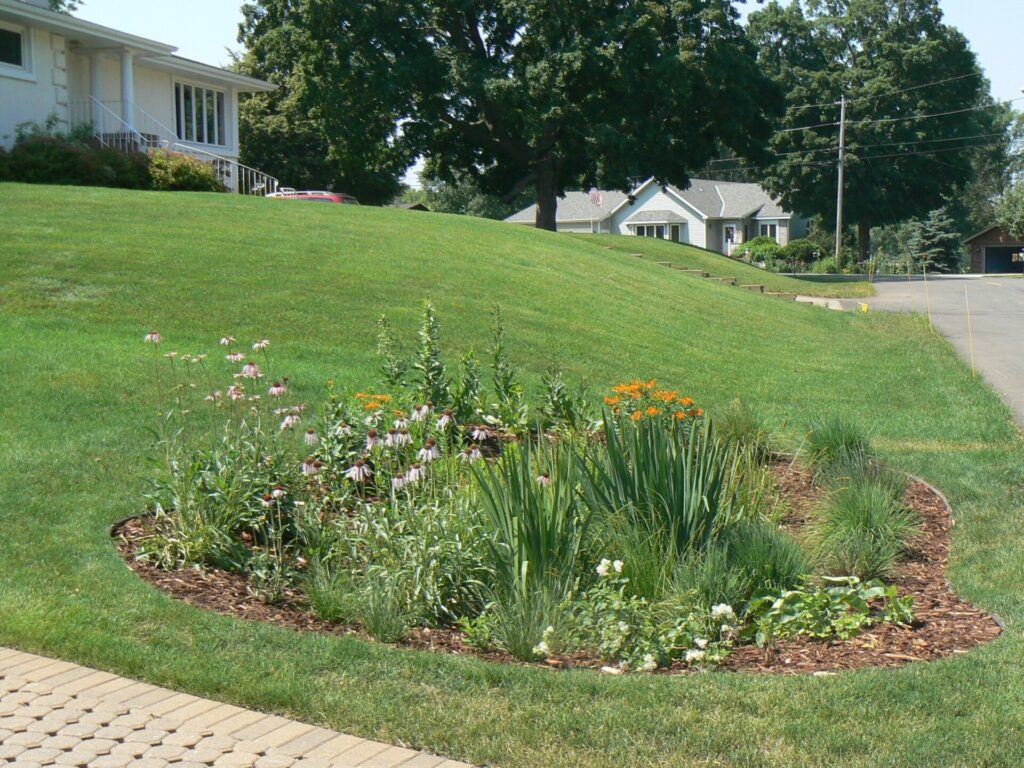
Photo Credit: Stearns Soil and Water Conservation District
MANURE MANAGEMENT AND SOIL HEALTH VIRTUAL WEBINAR
The Pope and Stearns SWCDs and the Minnesota Department of Agriculture invite you to a Virtual Webinar on January 7, 2021 from 11:00 a.m. to 12:15 p.m. to be held via Zoom. We are asking you to pre-register for this event by clicking this link:
https://us02web.zoom.us/meeting/register/tZYucu6rrTguGNdBZPbSJnPFOeiuL3jfy0s5
When you register, you will receive and email with the direct link to the Zoom call. Please register by January 5th, 2021. If you have trouble registering please give our office a call at 320-634-5327.
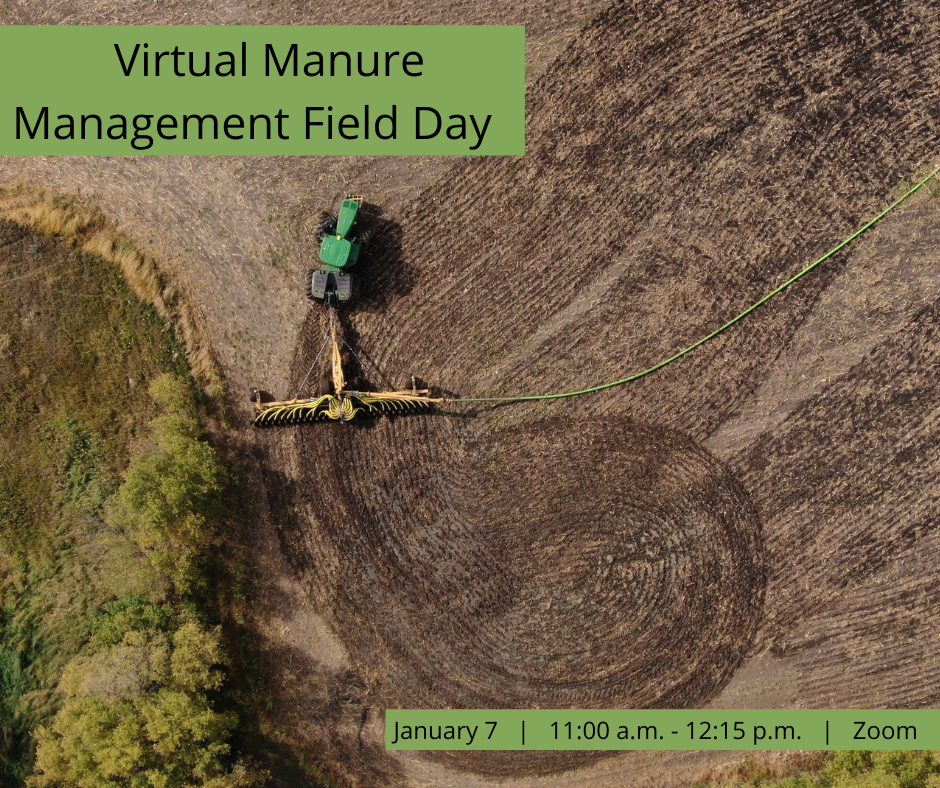
Virtual Manure Management Field Day to be held on January 7th, 2021
Join us for an informational webinar session about low disturbance manure injection, soil health, manure management, and tillage practices. Learn about how low soil disturbance manure injection into the soil is an effective management strategy for soil health and nutrient management. The virtual field day will place on Thursday, January 7th, 2021 form 11:00 a.m. to 12:15 p.m. via Zoom.
Even though this field day couldn’t be held in-person, the organizers and presenters have developed an informative virtual event that will include live interviews, videos, presentations, research updates, and Q&A. This session is designed for a wide audience including but not limited to farmers, landowners, agency staff, custom applicators, farm equipment dealerships, and anyone who utilizes manure on their operation. CCA Continuing Education Units (CEUs) for this virtual field have been applied for; .5 CEUs for Nutrient Management and .5 CEUs for Soil and Water Management.
During the virtual event, there will be live interviews from Greg Vold, co-owner of Dorrich Dairy, Tim Woeste, co-owner of Upper Midwest Pumping, LLC, and Kevin Wolter, Business Development Manager, Bazooka Farmstar. There will be research updates from University of Minnesota Extension staff members Melissa Wilson on manure management, Jodi DeJong-Hughes on tillage, and Anna Cates on soil health. There will also be drone footage featuring the application of manure taking place on Dorrich Dairy.
Pre-registration is required. To register, visitStearns County SWCD’s website at www.stearnscountyswcd.net or Pope SWCD’s website at www.popeswcd.org. Once you are registered, you will receive a confirmation email with your own personalized Zoom link; please save that link and utilize it to access the virtual event. Participants are encouraged to register by January 5th, 2021.
This virtual event is sponsored by the Minnesota Department of Agriculture’s (MDA) Ag Water Quality Certification Program, Clean Water Funds, Pope SWCD, and Stearns County SWCD.
Hosted by the Stearns County Soil & Water Conservation District (SWCD) and Pope Soil & Water Conservation District (SWCD) in partnership with the University of Minnesota Extension, Dorrich Dairy, Upper Midwest Pumping LLC, and Bazooka Farmstar.
For more information contact Holly Kovarik, Pope SWCD at 320-634-5327 or Brittany Lenzmeier, Stearns County SWCD at 320.251.7800 ext.3
2021 Sales Program Order Form
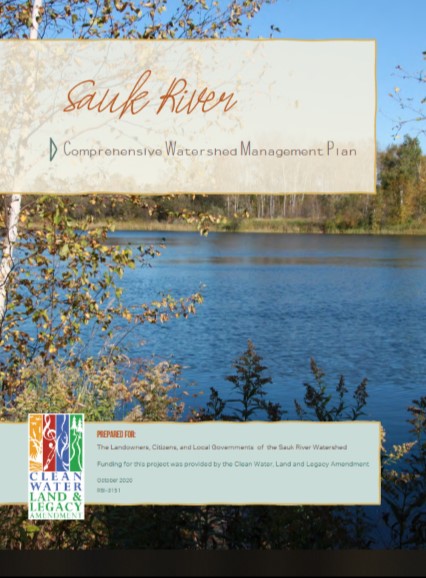
Sauk River Comprehensive Watershed Management Plan 60 Day Public Comment Period Open
(320) 352-2231 or email: sarah@srwdmn.org
A copy of the report can be found by clicking on the graphic above.
Summer Newsletter Hot Off the Press
NOTICE TO SERVICE CENTER VISITORS
During this time of social distancing, for the health and safety of our customers and staff the door is locked for visitors at this time.
Please conduct any SWCD business you can by email or telephone (320) 634-5327 or 320-634-5143 option #3
Please call to make an appointment by phone or email.
Please understand that staff hours might vary during this time of social distancing.
If you have questions about tree orders you can call the office to talk to Kelly or on his cell at 320-760-3002. We ask that if you have a payment to make then please send it in the mail.
We are working so please try to reach us using these other methods. We want to be able to assist you in the best way that we can at this time.
holly.kovarik@mn.nacdnet.net
jessica.hoheisel@mn.nacdnet.net
kelly.erickson@mn.nacdnet.net
nicole.brede@mn.nacdnet.net
Kernza Research Begins at Rosholt
Pope SWCD is working alongside the U of M and Stearns SWCD on studying the benefits of a new crop called Kernza. The study being done at our Rosholt research farm in Westport is to test the amount of nitrate leaching present in perennial crop productions. This spring we started with preparing the site and planted wheat after a corn/soybean rotation. This early fall we were then able to assist in the planting of the Kernza plots. Our office looks forward to what we can learn about Kernza and what this crop will be able to do for not only agriculture but for water quality.
The three goals of the Kernza project are: 1) Test that Kernza and other native seeds are more effective at reducing nitrate leaching than alfalfa and prairie under irrigated and rain-fed conditions by measuring nitrate samples collected from lysimeters. This work is being done by U of M and Pope SWCD staff. 2) Establish Kernza fields within the City of Cold Spring’s DWSMA and near the City of St. cloud’s Water Treatment Plant. These sites will be monitored for leaching and field production by the Stearns SWCD staff. 3) Examine Kernza as a food ingredient (bread, cereal pasta, beer, etc.) and non-food (straw) with MN companies and map local processor capabilities, opportunities, and barriers. Characterize and provide technical information on handling, storage, formulation, and shelf life of Kernza product development concepts. Supply nutritional profiles for food/beverage containing Kernza and conduct sensory analysis. The Agricultural Utilization Research Institute (AURI) will take lead.
Kernza is a domesticated variety of intermediate wheatgrass. This grain is already attracting attention from restaurants, bakeries, and breweries as being a new perennial grain. What is unique about this sod-forming grass is the very deep roots, growing to a depth of 10 feet. With such deep roots the plant is able to capture and use nitrate in the soil that otherwise leach into our groundwater. Excessive nitrate in groundwater can cause health problems and treatment for drinking water can be expensive. For more information please contact our office at 320-634-5143.
Kaley Poegel Named Teacher of the Year
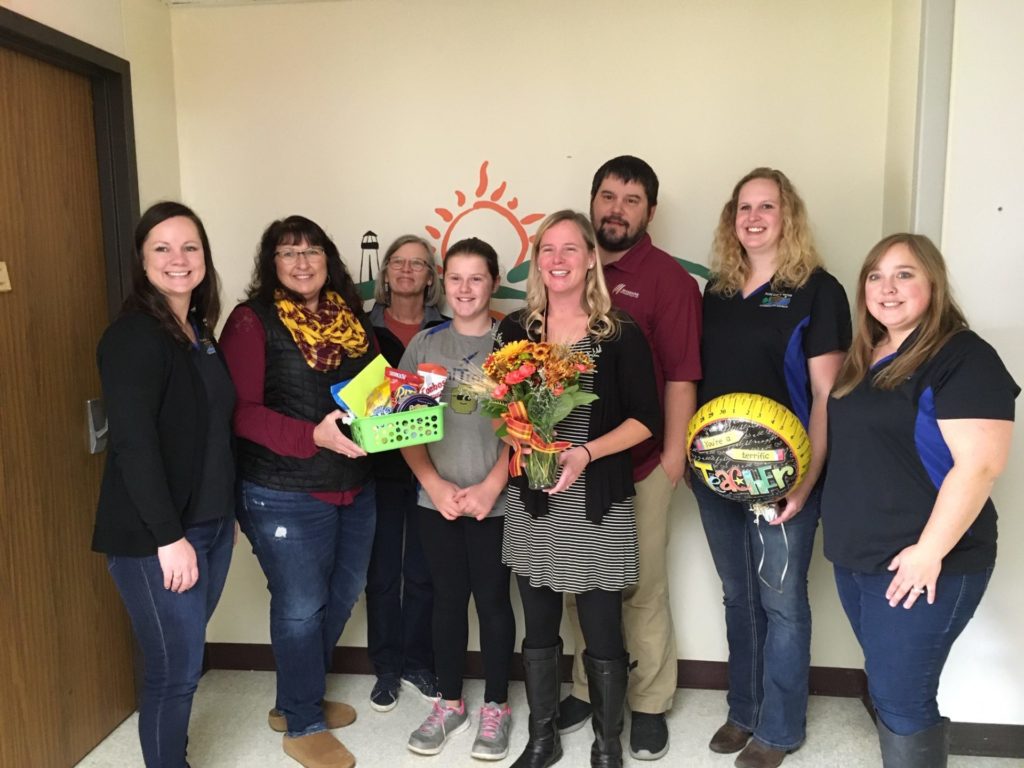
Pope and Stevens SWCD staff suprised Kaley with the news. Pictured are some of her family and SWCD staff.
On behalf of Pope and Stevens SWCDs, we would like to congratulate Kaley Poegel a 4th grade teacher at Glacial Hills Elementary School. Kaley was nominated by these SWCDs for the Minnesota Association of Soil and Water Conservation District’s Teacher of the Year. Kaley was selected as this year’s recipient. She will be honored in December at the MASWCD Conference on December 9th and by the County on December 17th. Congratulations Kaley for all you do for our area youth and especially your work on teaching them about the environment.
Donald and Shari Opdahl Selected as Outstanding Conservationists
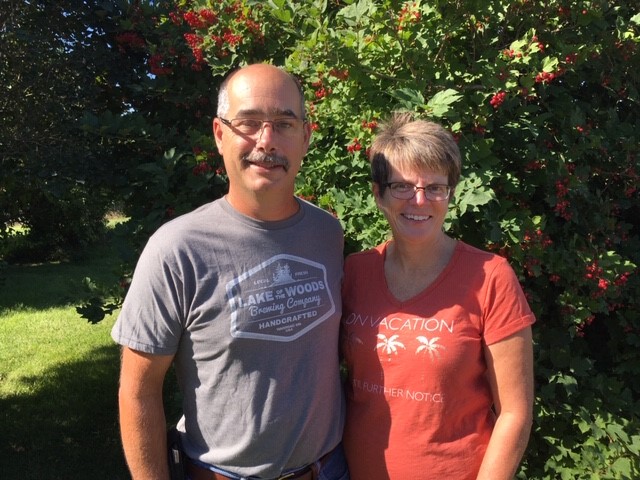
The Pope SWCD would like to congratulate this year’s Outstanding Conservationist, Don and Shari Opdahl. Don is an employee of the Minnesota Department of Agriculture (seed, biotech, and noxious weed unit) for the past 28 years. Shari is a retired music teacher of 34 years and most recently worked at Glacial Hills Elementary school.
The Opdahl’s operate an 820 acre corn and soybean farm south of Starbuck, Minnesota. The entire farm is on a 4 year rotation for grid soil sampling. The Opdahl’s have implemented 9 water and sediment control basins starting in 2015.They also installed approximately 20 water quality inlets on the remaining open intakes on their farm. They converted 1 open intake to a rock inlet design. Don and his family have been very supportive of the Pope SWCD and NRCS. They have on at least 2 occasions allowed our office to use their sites for educational program tours.
Don and Shari are very deserving of this recognition as the 2019 Outstanding Conservationists of the Year. They addressed their erosion concerns by implementing structural practices but were receptive and did implement new management to their tillage program. Their entire operation was reviewed under the Minnesota Ag Water Quality Certification program and did meet the criteria for certification once the tillage was adjusted, intakes were closed, and structures were installed. Don is a fourth generation Pope County farmer who hopes to pass this farm off to the fifth generation, his son. These investments Don and Shari have made will have a large impact on the future of the farm. Congrats again to the Don and Shari Opdahl Family on their efforts to improve their land for future generations.
They will be recognized in December at the Minnesota Association of Soil and Water Conservation Districts annual conference in Bloomington, Minnesota and by our County Board. Congratulations to the Opdahl Family on this well deserved recognition.
Special Weed of the Week Edition-Emerald Ash Borer
Emerald Ash Borer is an invasive beetle from Asia that infects and kills all native species of ash trees in North America. The larvae create tunnels under the bark as they feed. As these tunnels accumulate the ash tree begins to show signs of infestation. Once a tree shows symptoms of infestation it usually dies within 1-3 years.
The Spread:
Emerald Ash Borer was first found in North America in Michigan in 2002. Since then it has spread to numerous other states and Canadian provinces including Minnesota. In 2009, it was found in St. Paul and spread through the metro area. By 2016, the beetle had found its way to Duluth and most recently in 2019 it was found in 10 trees in Sauk Centre, MN.
The Threat:
With an estimated 1 billion ash trees throughout the state, emerald ash borer poses a substantial environmental and economic threat. EAB infestations are difficult to identify in the early stages and spread by both natural and artificial means; therefore, quarantines are enacted when an infestation is discovered. A map of the current EAB status can be found at the following website https://mnag.maps.arcgis.com/apps/webappviewer/index.html?id=63ebb977e2924d27b9ef0787ecedf6e9.
The Fight:
EAB’s active period is from May 1st to September 30th so it is best to avoid any removal or pruning of ash trees during this time. If you must prune or remove ash trees during this time due to health hazards have at least 1” of the outer bark and wood chipped onsite before transporting it to a removal site. It’s also important to not transport firewood to help control the spread of EAB. Landowners can also help control the spread of EAB by looking for systems of infestation.
Symptoms to look for include:
- Canopy thinning – branches will progressively start dying each year after infestation
- Increased woodpecker activity – these birds like to feed on the larvae, particularly downy and hairy woodpeckers
- D-shaped exit holes – the adults leave distinct D-shaped exit holes about 1/8” wide when they emerge from the tree
- Serpentine tunnels/bark splits – the larvae create meandering S-shaped tunnels as they feed on the vascular tissue of the tree which is only visible when the bark is peeled away. These tunnels can cause a split in the bark.
If you suspect one of your trees to have Emerald Ash Borer please call the Minnesota Department of Agriculture’s Arrest the Pest hotline at 888-545-6684. Also note the exact location of the tree and take a digital photo if possible. Landowners can also contact the local Pope County Ag Inspector- Barry Bouwman at 320-634-7791 or the Swift County Ag Inspector- Tom Orr at 320-843-4910.
Pope SWCD MONITORING PLAN FOR BUFFER COMPLIANCE TRACKING
§103F.48 RIPARIAN PROTECTION AND WATER QUALITY PRACTICES
1. COMPLIANCE TRACKING OF ALL PARCELS SUBJECT TO THE BUFFER LAW
All parcels in the county are to be reviewed within a 3‐year timeframe. The SWCD will review all parcels once every 3 years. This will coincide with the new aerial imagery received by the Farm Service Agency. Google Earth may also be utilized or the Counties Pictometry Imagery.
2. RANDOM SPOT CHECKS
Random spot checks will be done in addition to the tracking of all parcels within a 3‐year span. These checks may be conducted via aerial photo review or on‐site review depending on availability of updated aerial photos and the practice that is being checked/access to farms. A combination of both aerial and on‐site review may also be used.
a. The SWCD will conduct 25‐50 parcels on a random spot check each year outside of the scheduled area.
Note: ** There are 4,445 applicable parcels in Pope County.
b. Additionally, the SWCD should review parcels of emphasis more frequently.
Previously non‐compliant
No‐till/Conservation tillage or cover crop alternative practice plans
Variable width buffers (i.e. Land O’ Lakes buffer tool, Decision Support Tool)
Other Alternative Practice Plans
Cost‐share funded projects (years 1,5,9 of contract)
Parcels of further emphasis (potential violators)
3. PROCESS TO HANDLE COMPLAINTS
- Pope SWCD will investigate public complaints related to buffer law compliance but documenting the compliant including, location, landowner, potential violation, etc. Pope SWCD will then further investigate the compliant by aerial review, landowner calls, and field site checks.
- If a violation of buffer law non‐compliance is found Pope SWCD will inform the enforcing agency (Pope Land and Resource Management, North Fork Crow River Watershed District or Sauk River Watershed District) and the Board of Water and Soil Resources. A non‐compliance form will be filled out along with a map of the parcel and will be provided to the enforcing entity for follow up with the landowner.
- Appeals will be handled by the regulatory entity with Pope SWCD staff providing technical information regarding the buffer law and the project site as requested.
For more information contact Pope SWCD at 320-634-5327.
Rosholt Research Farm Celebrates 50 Years in 2018
Rosholt Research Farm celebrates its 50 year anniversary of existence in May this year. Rosholt Research Farm located near Westport in Pope Country was purchased by Pope, Kandiyohi and Stearns County Soil and Water Conservation Districts (SWCDs) on May 27, 1968. The motivation to purchase property was to conduct soil and water research.
The 40 acre research farm, now solely owned by Pope SWCD, has the necessary uniform soil type, soil depth, topography and adequate water for irrigation research.
Research at the farm has involved many partners over the years including: USDA-Agricultural Research Service (ARS), University of MN Pope County Extension, US Forest Service, WesMin RC&D, Minnesota Department of Agriculture, University of Minnesota, Prairies Lakes Co-op, and Pope and Stearns County SWCDs.
Nitrogen and water quality research is presently being conducted at Rosholt. The goal is to evaluate the management of nitrogen fertilizers and cover crops in irrigated crop production systems and their impacts on groundwater resources. The objective is to quantify the impact of living mulch (kura clover), cover crop (cereal rye), or no cover crop on nitrate leaching and nitrogen management for irrigated row crops. The project is intended to provide local information to help improve fertilizer management in irrigated row crop production systems.
Data collection for the current research began in 2016 and is designed to be collected through 2020. However, Clean Water funding from the Minnesota Department of Agriculture (MDA) is only secure through 2018. Pope and Stearns County SWCD’s are currently collecting input on updating Rosholt Research Farm’s long term vision plan. This plan will assist in securing funding to continue the current research project and future research at Rosholt Research Farm.
For more information on the Rosholt Research Farm please visit Pope SWCD’s website at https://popeswcd.org/program/rosholt-research-farm/.
Rain Barrels Can Be Used For Water Conservation
By Dalton Herrboldt, Pope SWCD Intern
Want a way to utilize all that rain water that runs off of your roof and goes out your down spout? A rain barrel is your solution. It is a perfect way to capture soft water and help to reduce runoff. In the event of a rain shower rain washes chemicals, excess fertilizer, and sediment into storm sewers. You can help reduce this through the process of catching rain water in a rain barrel.
Rain water contains no chlorine, lime, or calcium making it perfect for any flowers around the house or potted plants. Being that is has no minerals in it, rain water is perfect for washing your car and will not leave the streaks that are left behind from hard water.
Rain Barrel Facts
- Can save 1300 gallons of water throughout the growing season
- Garden and lawn irrigation accounts for about 40% of residential water use during the summer
- ½ inch of rain on 200 square feet of a roof is enough to fill a 60 gallon rain barrel
- Reduces amount of water you pay for from the municipal for watering gardens and lawns
With a 32 square foot garden it is recommended to use 20 gallons of water per week. If you saved 1300 gallons of water with a rain barrel you would be able to water a 32 square foot garden for 65 weeks.
To maximize your rain water potential you can connect multiple rain water barrels together. Once the first one fills up to the overflow level it will start filling the second one, or you can hook them together from the bottom of the barrel and they will fill up at the same time. There are several different exterior designs for barrels now to match with your house or garage to your liking.
Now is the time to consider purchasing a rain barrel as the gardening season is fast approaching. The cost is $65.00 plus tax and we do have a limited supply available. If you have an interest in collecting rain water and would like to purchase a rain barrel contact the Pope Soil and Water Conservation District at 320-634-5327.
Pope SWCD Recognized Chamber Business of the Month
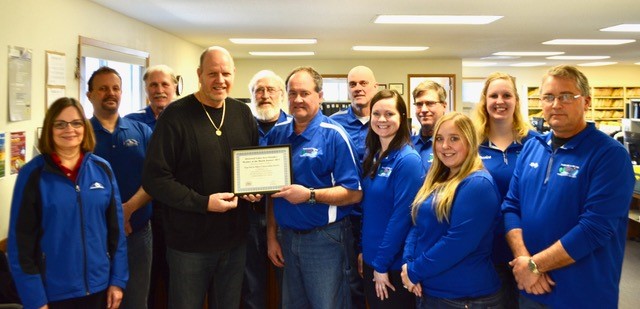
Front row: Kay Blaurert, Dean Peterson, Tom Talle, Holly Kovarik, Nicole Brede, Kelly EricksonBack row: Scott Formo, Randy Pederson, D. Gary Reents, Mike Billehus, Keith Nygaard, and Jessica Oldkowski
Photo credit: Pope County Tribune/Marta Johnson
Pope SWCD Recognized as 2016 SWCD of the Year
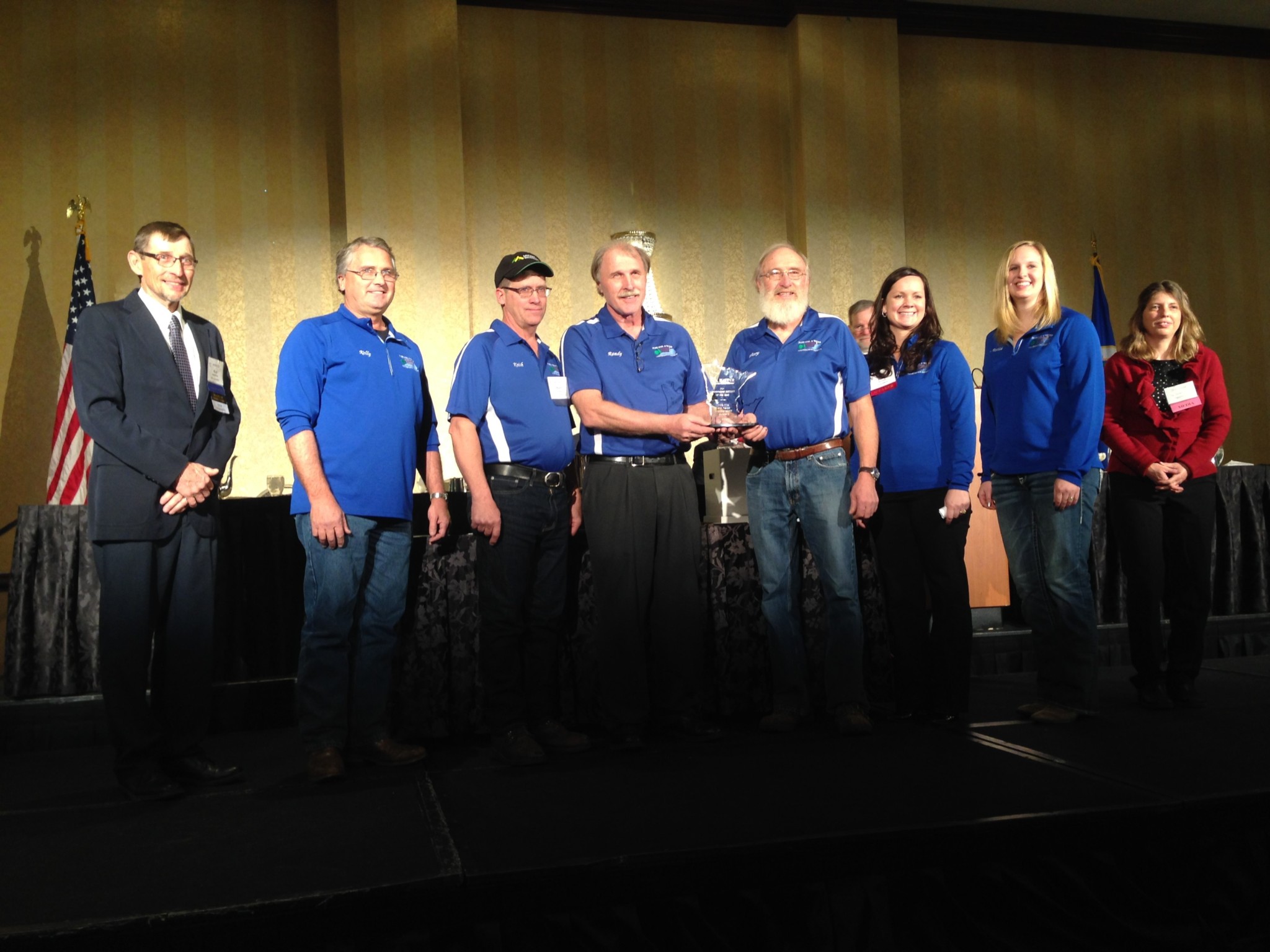
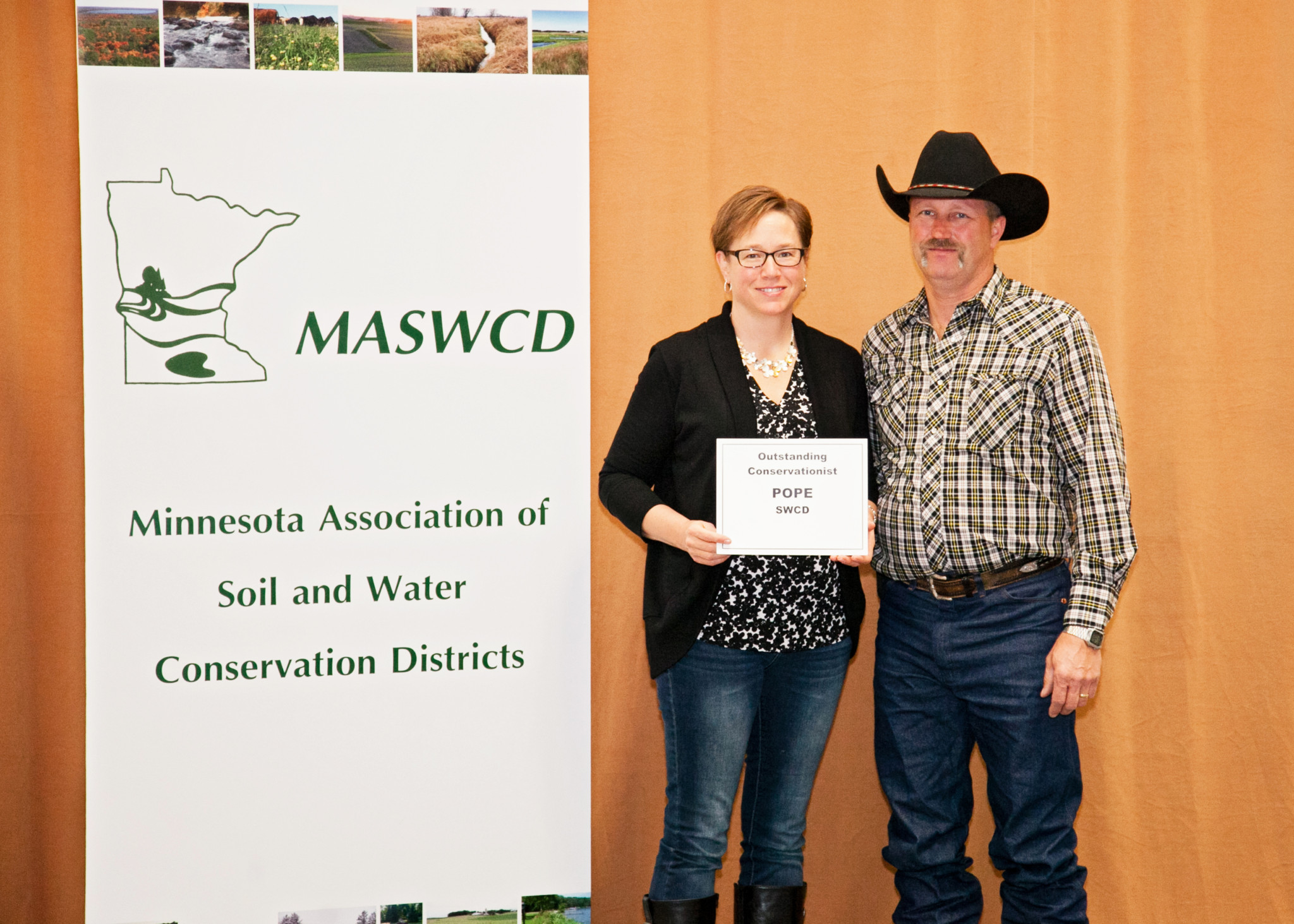
Pope SWCD board and staff attended the Minnesota Association of Soil and Water Conservation District Annual Conference December 4-6 in Bloomington, Minnesota. Pope SWCD nominated Paul and Barb Koubsky as this year’s Outstanding Conservationist for Pope County. They were recognized at the convention during a luncheon on Tuesday, December 6th.
Pope SWCD was also named as the 2016 District of the Year. This award is given to only one SWCD in the state that has shown leadership and has gone above and beyond in its programs and activities.
- 1
- 2
- 3
- …
- 25
- Next Page »